Stop Wasting Water and Chemicals
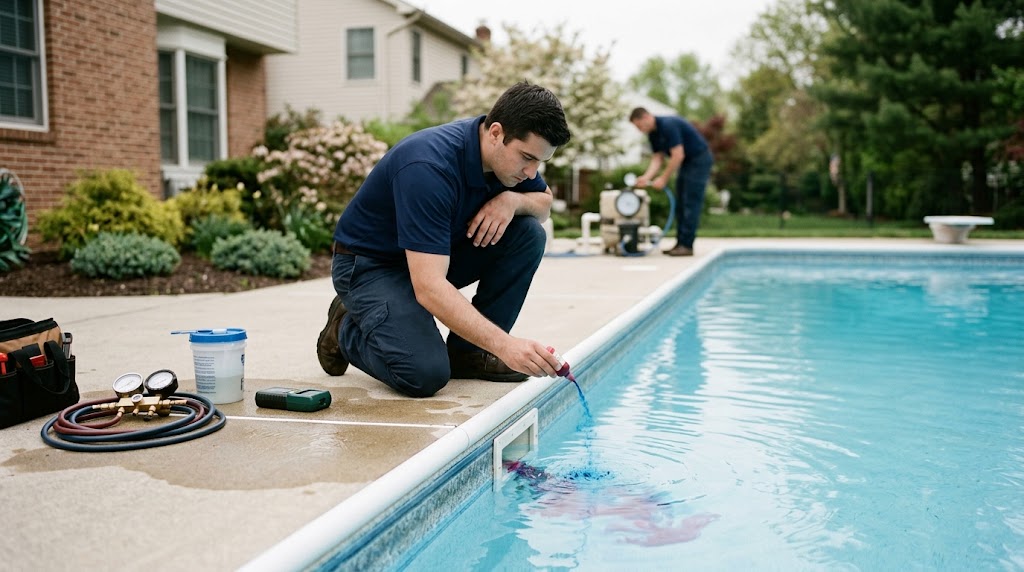
Dye testing at fittings and pressure testing underground lines pinpoints exactly where pool water is escaping.
Maintaining a swimming pool in Ocean County is a significant investment. When your water level drops rapidly, you're not just losing water—you're flushing expensive chemicals and putting stress on your pump equipment. Whether you have an older concrete pool in South Seaside Park or a newer vinyl liner installation in Bayville, finding the source of the loss requires a systematic approach.
Many leaks in our area are discovered during the spring pool opening. After a harsh New Jersey winterizing, underground PVC lines that were improperly blown out can freeze, expand, and crack. When the system is fired up in the spring, the water loss becomes immediately apparent.
Evaporation or a Real Leak?
During the hot, sunny days of summer, it's normal for a pool to lose up to a quarter-inch of water per day to evaporation. To confirm a real leak, perform the "Bucket Test":
- Place a bucket of water on your pool steps, immersed up to the second step.
- Mark the water level inside the bucket and the pool water level on the outside of the bucket.
- Check the levels after 24 hours. If the pool water level dropped significantly more than the water inside the bucket, you have a leak.
Confirmed You Have a Leak?
Don't keep adding water and chemicals. Let us pressure test your lines and dye test your fittings to find the exact problem.
Call (201) 510-1615Our Diagnostic Process
We divide pool leak detection into two main categories: structural leaks and plumbing leaks. We begin by examining the most common culprits: the skimmer throat, the return jets, the main drain, and the underwater light niche. Using specialized dyes, we can visually confirm if water is being drawn out of these structural fittings.
If the structure is sound, we turn our attention to the plumbing. We rigorously pressure test the suction and return lines to determine if there is an inground pool leak Berkeley Township residents often face when their underground pipes fail. If a line fails the pressure test, we use acoustic listening equipment—similar to how we find a water line leak—to track the underground pipe and mark the exact location of the break for repair.
Addressing these issues early prevents massive water waste and protects the sandy soil around your pool foundation from washouts. If you also suspect your lawn sprinklers are losing water, we can perform irrigation leak detection during the same service call.
Frequently Asked Questions
How do I know if my pool is leaking or just evaporating?
The bucket test is the easiest way to tell. Place a bucket of water on the pool steps, mark the water level inside and outside the bucket, and check it after 24 hours. If the pool water level dropped more than the water in the bucket, you have a leak.
Where do most pool leaks occur?
The most common leak locations are the skimmer throat, return jets, the main drain, the underwater light niche, and underground plumbing lines that freeze and crack during the winter.
Can you test the underground plumbing lines?
Yes. We use specialized equipment to pressure test the suction and return lines to determine if the leak is in the underground PVC piping rather than the pool structure itself.