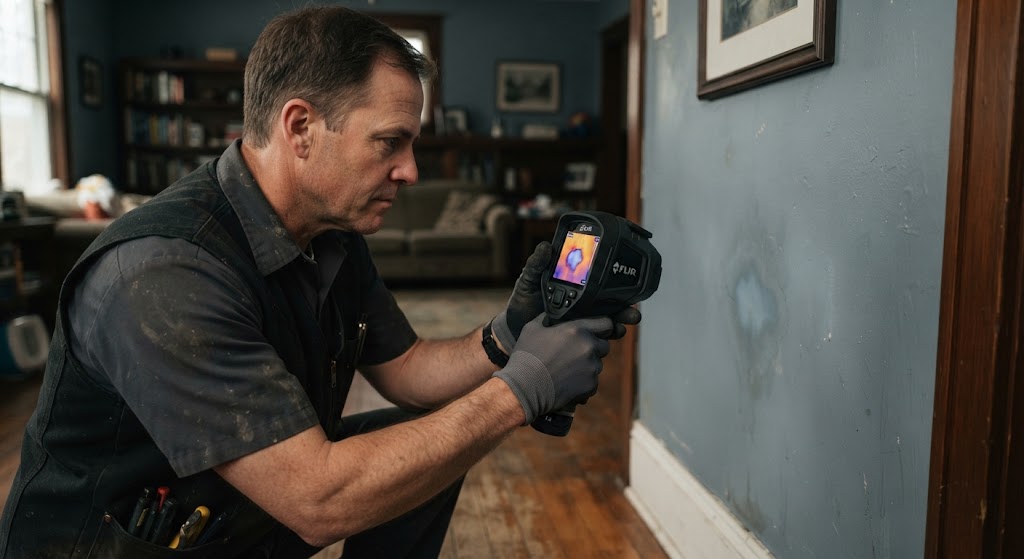
Pinpointing Leaks Without the Demolition
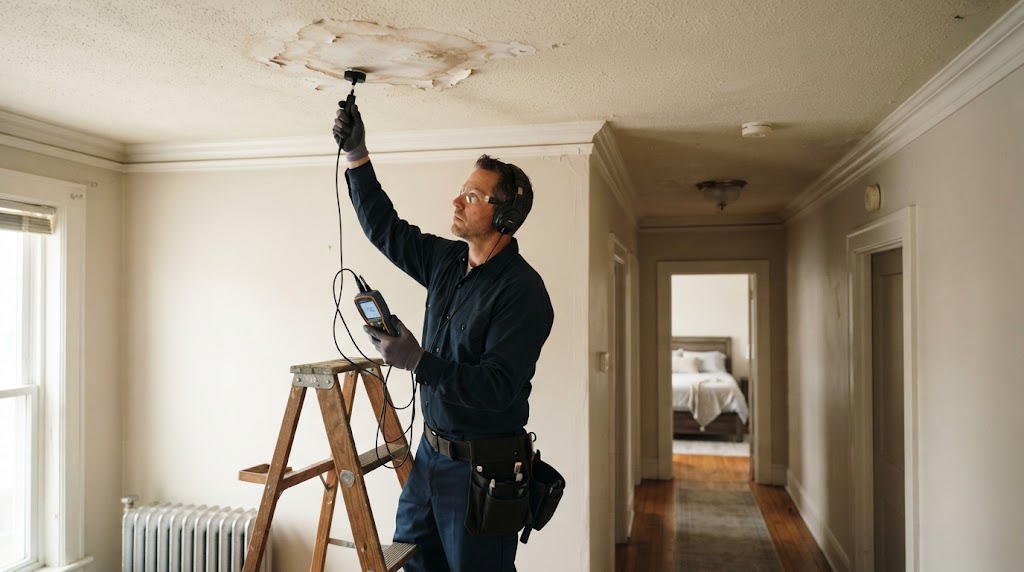
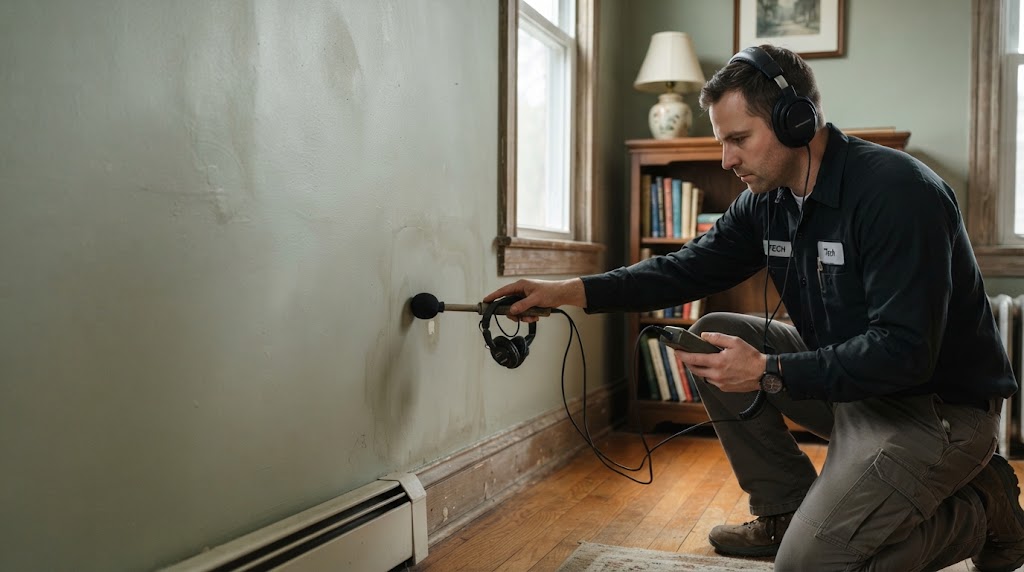
Acoustic sensors and thermal cameras find the leak source without cutting open your walls.
Water leaks in your home rarely happen in plain sight. Often, the first sign of a problem is a water stain on the ceiling, a musty odor in the bathroom, or a surprisingly high water bill leak Berkeley Township NJ residents dread opening. When a leak behind wall Berkeley Township structures occurs, guessing where the pipe is broken leads to unnecessary damage and expensive drywall repairs.
In neighborhoods like Silver Ridge and Holiday City-Berkeley, older plumbing systems are prone to pinhole leaks in copper supply lines, failing joints, and shower/bathroom or condo leaks where water slowly seeps into the wall cavity over time.
Signs You Have a Hidden Leak
- The Water Meter Test: If you turn off all plumbing fixtures (and ensure no toilets are running) but your water meter continues to spin, water is escaping somewhere.
- Damp or Discolored Drywall: Yellow or brown stains, bubbling paint, or peeling wallpaper on walls and ceilings.
- Persistent Mold Odors: A musty smell that won't go away, particularly near bathrooms, utility rooms, or lower kitchen cabinets.
- Warm Floor Spots: A sign of a hot water leak beneath your flooring or foundation.
Stop the Water Damage
If you have unexplained moisture, don't wait for mold to develop or structural rot to set in. Our non-invasive pinpointing finds the source fast.
Call (201) 510-1615Our Non-Destructive Diagnostic Process
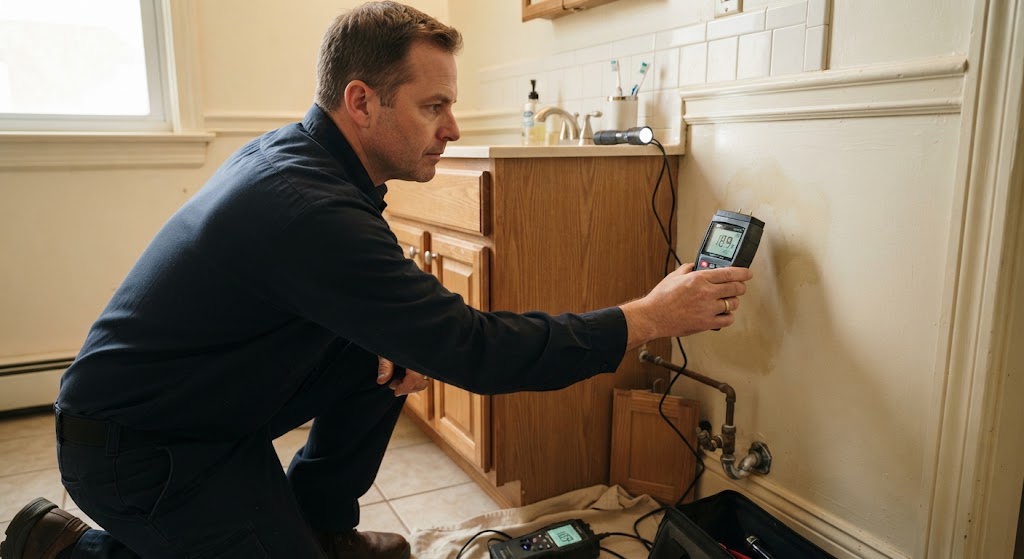
Moisture meters map the path of water through walls and ceilings to find the exact pipe failure.
Our goal is to find the exact source of the leak before anyone opens a wall. We deploy a combination of advanced technologies:
- Thermal Imaging: We use infrared cameras to detect temperature anomalies caused by moisture hidden behind drywall, under floors, or above ceilings.
- Acoustic Listening: Sensitive acoustic equipment allows us to hear the high-frequency hiss of water escaping a pressurized pipe through the wall.
- Moisture Mapping: Electronic moisture meters help us track the path of the water to its origin, as water often travels along joists or framing before showing up as a ceiling stain.
- Pressure Testing & Tracer Gas: For difficult leaks, we may pressure test specific lines or use a safe tracer gas to detect exactly where the pipe has failed.
Once we pinpoint the issue, whether it's a hidden pipe defect, a running toilet/fixture leak, or a shower pan failure, we can proceed with a targeted pipe leak repair. If the leak is actually located under the concrete floor, we utilize our specialized slab leak detection methods.
Costs for resolving a hidden leak depend heavily on how accessible the pipe is and what material must be removed and replaced (like tile versus drywall) to make the repair. The best prevention is addressing signs of moisture early before major damage occurs.
Frequently Asked Questions
How do you find a leak behind a wall without tearing it open?
We use non-invasive tools such as acoustic listening equipment to hear the leak, thermal imaging cameras to see temperature changes caused by moisture, and moisture meters to map the exact location of the dampness.
Why is my water bill suddenly so high?
A sudden high water bill is a strong indicator of a continuous hidden leak. Even a small pinhole leak running 24/7 behind a wall or a running toilet can waste thousands of gallons of water in a billing cycle.
What should I do if I smell mold in my bathroom?
A persistent mold or mildew smell often means water is leaking into the wall cavity from a shower pan, tub drain, or supply line. You should have a leak detection specialist investigate to find the source before rot sets in.